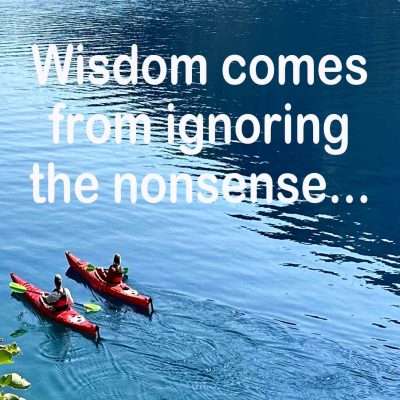
 How many times in the last few months (or years) have you heard someone make a statement that was so bizarre and outrageous that you could barely believe anyone could think that true? I have—more than once. It’s tempting to just roll my eyes and try to run in the opposite direction. That, or silently accuse them of (among other harsher judgements) not being able to think critically. But unfortunately, those actions don’t seem to be isolated. In today’s world it seems that such declarations and behaviors are everywhere—in the media, online and out of the mouths of people we meet at the grocery store. We can’t run from everybody who lies and/or makes up wacky assertions. Instead, maybe we ought to learn, and to teach each other, how to critically ignore that input. Or, as William James, the author of The Principles of Psychology wrote, “The art of being wise is knowing what to overlook.” [Read more…]
10 Lessons Stoics Can Teach Us About Living A Good Life
 Ever been told to “cowboy up”? How about “It’s time to put on your big girl panties?” Ever been accused of having no emotion? Unfortunately, much of the time, we tend to equate these questions as either manipulation or heartlessness. But what if the sentiment behind these statements originates from the ancient Stoic philosophy? What if they contain powerful lessons that may benefit us all? In light of some of the recent events in our world, I decided to explore whether Stoicism and some of its greatest thinkers might offer some ideas we can use to live a good and SMART life.
First, a little history. Stoicism is a philosophy founded in Greece in the 3rd Century by a man named Zeno of Citium. With a strong emphasis on virtue, justice, duty and reason, the Stoics believe that a life of self-control and moderation is a path that leads to a good life. Three of the most famous leaders of the philosophy include Marcus Aurelius, Epictetus, and Seneca. In practice and intention, some people equate Stoicism to a more Western approach to Buddhism. [Read more…]